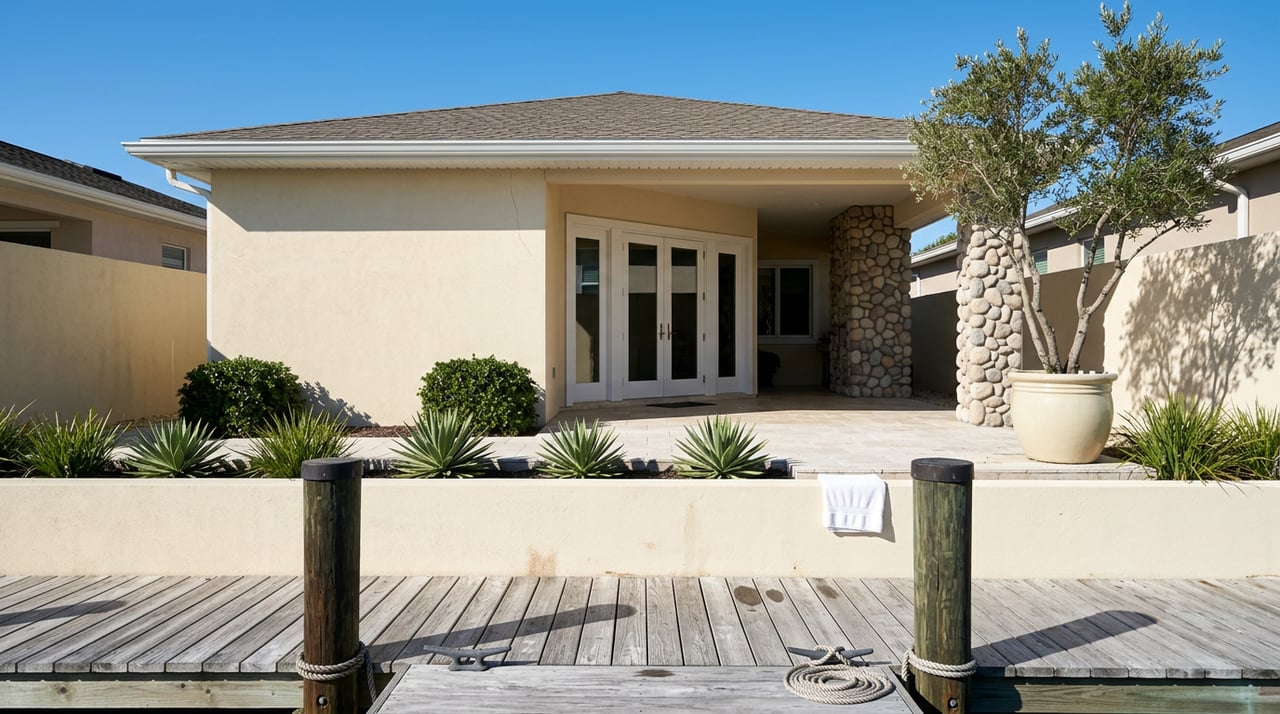
If you're shopping for a home on Balboa Island or Lido Isle this year, here's a question worth asking before you write an offer: do you actually own the dock behind the house, or are you buying the right to use someone else's water for a set number of years at a rent the state just said is too low?
For most of Newport Harbor, the answer is the second one. The seabed under that dock almost never belongs to the homeowner. It belongs to the State of California, held in trust and managed by the City of Newport Beach on the state's behalf under a set of grants known collectively as the Beacon Bay Bill. What conveys with a typical harbor-front sale isn't ownership of the water. That distinction has always mattered for financing and resale. In 2026, it matters more, because the state has just told the city its rent on that public land has been set too low for years, and the fix is now moving through the pipeline.
The permit is not the dock
Newport Harbor's waterways are tidelands, land under tidal water that California holds in public trust for navigation, commerce, and recreation. A set of grants dating back to 1919 and amended most significantly in 1978 put the City of Newport Beach in charge of managing most of that trust land as a kind of landlord acting on the state's behalf. According to the City of Newport Beach, state law requires the city to charge fair market rent for any private use of that public asset, whether it's a commercial marina, a yacht club, a mooring, or a homeowner's private pier.
That last category is where most buyers get surprised. A house on Harbor Island or the Balboa Island bayfront can be fee-simple property right up to the bulkhead. The dock extending from that bulkhead into the water sits on land the homeowner doesn't own and never did. The city's own harbor department describes the arrangement plainly: residential piers, moorings, and commercial slips are all uses of public trust assets, and rent on those assets is not a tax or a fee. It's rent, and by law it has to reflect what that water is actually worth.
Not every "waterfront" address plays by the same rules
Here's the part most guides to Newport Harbor skip past, and it's the detail that actually changes how you should compare one waterfront listing to another. Not every stretch of water inside city limits is public trust tidelands. The city's own harbor fee documentation carves out specific exceptions: some areas around Newport Island, the Linda Isle lagoon, Dover Shores waterways, and Promontory Point waterways are not classified as public trust lands the way most of the harbor's main channel and island perimeters are.
That distinction matters when comparing two homes that both call themselves waterfront, one on the Balboa Island bayfront and one on a Dover Shores canal.
The number the state says is wrong
In December 2025, the California State Lands Commission issued its formal review of how Newport Beach manages its public trust lands. The central finding on residential docks was direct: the city is not charging fair market rent for residential piers sitting over city tidelands. A staff analysis presented to the commission months earlier, in August 2025, had already put a number on the gap, with Voice of OC reporting that residential piers were being billed at roughly 58 cents per square foot when fair market value could run close to double that. The commission's chair, Lieutenant Governor Eleni Kounalakis, was careful at that August hearing to note the limits of the state's authority, telling attendees, "This is not our call, this is the city's call."
That's exactly why the timeline matters for anyone buying or selling this year. The city has now committed to a multi-year process. According to the City of Newport Beach, new independent appraisals of residential pier leases are underway in 2026. The Harbor Commission kicked off a series of public meetings this spring to work through rate methodology, transferability, and how the state's recommendations get phased in. A City Council policy vote is anticipated sometime in 2027. The city has said no rate increases or transfer restrictions take effect without council approval and public notice, so nothing changes overnight. But the direction is set, and it points toward higher rent on public trust piers than harbor homeowners have been paying.
Three neighborhoods to research
Some Newport Harbor neighborhoods have tidelands details worth checking before you buy.
Beacon Bay is the clearest example.
The Balboa Bay Club and Harbor Island are two more areas to research. If you're looking at a property in any of these three areas, get the lease terms in writing before you get attached to the house.
What this means at the closing table
None of this should scare a buyer away from Newport Harbor waterfront. It should change what gets pulled and read before contingencies come off.
- Confirm whether the property's water access is a recorded pier permit, a long-term lease, or something else, and get the document itself, not a summary of it.
- Check the remaining term on any lease against the loan term you're applying for. Lenders generally want the lease to outlast the mortgage by a meaningful margin, and a short remaining term can limit financing options or push a buyer toward a portfolio lender.
- Ask directly whether the property sits on public trust tidelands or one of the harbor's carved-out waterways like Newport Island, Linda Isle lagoon, Dover Shores, or Promontory Point, since that answer determines whether the 2026 reappraisal process touches this dock at all.
- Review who is financially responsible for dredging, bulkhead repair, and pier maintenance.
- Get a title report that specifically flags tidelands exceptions, and ask the title company for any available endorsement addressing public trust land.
A few questions worth asking before you tour a bayfront listing
Will my dock lease rent change during escrow? Not without City Council approval and public notice first. The city has been explicit that no rate changes take effect until that vote happens, expected in 2027, so a home going into escrow now shouldn't see a mid-transaction rent surprise on the current lease.
Does this affect condos and HOA-managed slips the same way it affects single-family piers? Not identically. Where a slip is a common element managed by an HOA rather than an individual pier permit, the reserve study and CC&Rs, not the state's residential pier appraisal, are usually the more relevant documents to pull.
Is Balboa Island treated differently for new docks? New noncommercial piers there are subject to review.
The dock in the listing photo is often the reason a buyer falls for a Newport Harbor home. The permit behind it is the reason two identical-looking properties can carry very different long-term costs. If you're comparing waterfront addresses this year, that paperwork deserves the same scrutiny as the square footage.
If you're weighing a Newport Beach waterfront purchase or getting a harbor-front home ready to list, Casa Bella Realty Group can walk the permit, the lease, and the title report with you before you're locked into a contingency period. Request a Free Home Valuation to start the conversation.
This article is general information, not legal, tax or financial advice. Consult a qualified professional about your situation.
